Mathematics
Adding and Taking Away to 20
Addition and subtraction to 20
Number bonds, counting on, taking away and little market sums in cedis and pesewas.
Numbers to 20
Ama can count to 20. Can you?
1, 2, 3, 4, 5, 6, 7, 8, 9, 10, 11, 12, 13, 14, 15, 16, 17, 18, 19, 20.
Say the numbers out loud. Clap once for each number. When you get to 20, stop and sit down.
In this book we will add numbers (put together) and subtract numbers (take away). We will use fingers, stones, bottle tops and things from the market. Let us begin!
Try this: Count the fingers on both hands. How many? Now count your toes too. How many altogether?
2 / 37
Adding means putting together
When we add, we put two groups together and count how many there are now.
Kofi has 2 oranges. His mother gives him 3 more oranges.
Put them together: 2 and 3.
Count them all: 1, 2, 3, 4, 5.
Kofi now has 5 oranges.
We write it like this: 2 + 3 = 5
The sign + means add or plus. The sign = means equals or is the same as.

3 / 37
Adding with your fingers
Your fingers are always with you, so they are good for adding.
4 + 2
Hold up 4 fingers on one hand. Hold up 2 fingers on the other hand. Now count all the fingers that are up: 1, 2, 3, 4, 5, 6.
4 + 2 = 6
Try this with your fingers:
- 3 + 1 = ?
- 5 + 2 = ?
- 1 + 4 = ?
- 2 + 2 = ?
Say the answer out loud each time.
4 / 37
Adding with stones and bottle tops
Collect some small stones or bottle tops. Put them in two groups.
Abena puts 3 stones in one group and 4 stones in another group. She pushes the groups together and counts: 1, 2, 3, 4, 5, 6, 7.
3 + 4 = 7
Now you do it. Make these groups and count them all:
- 2 stones and 5 stones
- 6 stones and 1 stone
- 4 stones and 4 stones
Think: Does it matter which group you count first? Try 2 + 5 and then 5 + 2. What do you notice?
5 / 37
The order does not matter
Here is a secret that makes adding easier.
3 + 5 = 8 and 5 + 3 = 8
Both give the same answer! When you add, you can swap the numbers around and the answer stays the same.
So if a big number comes second, swap it to the front. It is easier to start with the big number.
Try this: Which is easier to work out?
- 2 + 7 or 7 + 2?
- 1 + 9 or 9 + 1?
They give the same answer. Start with the big number and count on.
6 / 37
Counting on
Counting on is a quick way to add. You do not have to count everything from the beginning.
7 + 2
Put the big number, 7, in your head. Now count on 2 more: 8, 9.
7 + 2 = 9
Try it with your fingers. Say "seven", then hold up two fingers and count: "eight, nine".
Try this: Count on to find the answers.
- 6 + 3 (say six, then: seven, eight, nine)
- 8 + 2
- 5 + 4
- 9 + 1
7 / 37
Number bonds to 5
A number bond is two numbers that join to make another number.
These pairs all make 5:
- 0 + 5 = 5
- 1 + 4 = 5
- 2 + 3 = 5
- 3 + 2 = 5
- 4 + 1 = 5
- 5 + 0 = 5
Hold up one hand. Fold down 2 fingers. How many are still up? 3. So 2 and 3 make 5.
Try this: Fold down 1 finger. How many are up? Fold down 4 fingers. How many are up?
8 / 37
Number bonds to 10
Now use both hands. These pairs all make 10:
- 1 + 9
- 2 + 8
- 3 + 7
- 4 + 6
- 5 + 5
- 6 + 4
- 7 + 3
- 8 + 2
- 9 + 1
Hold up 10 fingers. Fold down 3. How many are still up? 7. So 3 and 7 make 10.
Learn these pairs well. They are like good friends who always go together.
9 / 37
Number bond song
Kwame sings this song to remember the bonds to 10. Sing it too!
One and nine, two and eight, three and seven, don't be late, four and six, five and five, number bonds keep maths alive!
Clap on each pair.
Try this: Your teacher or a friend says a number from 1 to 9. You say the number that goes with it to make 10. Be quick!
- "Six!" — you say "Four!"
- "Two!" — you say "Eight!"
- "Nine!" — you say ...?
10 / 37
Adding to 10 at the market
Ama goes to the market with her aunty. She sees eggs in a basket.
Aunty buys 6 eggs. Then she buys 4 more eggs.
6 + 4 = 10
Aunty has 10 eggs altogether.
Try this: Draw the eggs. Draw 6 eggs in one basket and 4 eggs in another basket. Count them all. Did you get 10?
Now try: Aunty buys 3 tomatoes and 5 tomatoes. How many tomatoes does she have?

11 / 37
Adding past 10
Now let us add bigger numbers. Counting on still works!
8 + 5
Say "eight". Hold up 5 fingers. Count on: 9, 10, 11, 12, 13.
8 + 5 = 13
9 + 4
Say "nine". Count on 4: 10, 11, 12, 13.
9 + 4 = 13
Try this:
- 7 + 5 = ?
- 9 + 3 = ?
- 8 + 6 = ?
- 10 + 4 = ?
Remember: start with the big number, then count on.
12 / 37
Make 10 first
Here is a clever trick. Make 10 first, then add the rest.
8 + 5
8 needs 2 more to make 10. Take 2 from the 5. Now the 5 has only 3 left.
8 + 2 = 10, then 10 + 3 = 13.
7 + 6
7 needs 3 to make 10. Take 3 from the 6. The 6 has 3 left.
7 + 3 = 10, then 10 + 3 = 13.
Try this: Use "make 10 first" for 9 + 6. (9 needs 1 to make 10. What is left?)
13 / 37
Doubles
A double is when you add a number to itself.
- 1 + 1 = 2
- 2 + 2 = 4
- 3 + 3 = 6
- 4 + 4 = 8
- 5 + 5 = 10
- 6 + 6 = 12
- 7 + 7 = 14
- 8 + 8 = 16
- 9 + 9 = 18
- 10 + 10 = 20
Doubles are easy to remember. Your two hands are a double: 5 + 5 = 10. Your eyes are a double: 1 + 1 = 2.
Try this: Find more doubles around you. Two feet? Two ears? A pair of slippers?
14 / 37
Adding with money
In Ghana we use cedis and pesewas. We write cedis like this: GH₵.
Kofi has GH₵2. His father gives him GH₵3.
GH₵2 + GH₵3 = GH₵5
Kofi now has GH₵5.
Try this:
- Abena has GH₵4. Her uncle gives her GH₵5. How much does she have now?
- Kwame has GH₵6. He finds GH₵2 in his pocket. How much does he have now?

15 / 37
Buying kenkey
Ama's mother sends her to buy kenkey.
One ball of kenkey costs GH₵3. Ama buys 2 balls.
GH₵3 + GH₵3 = GH₵6
Ama also buys fried fish for GH₵4.
GH₵6 + GH₵4 = GH₵10
Ama pays GH₵10 in all.
Try this: Kofi buys one ball of kenkey for GH₵3 and pepper for GH₵1. How much does he pay?

16 / 37
Word problems: adding
A word problem is a story with numbers in it. Read it carefully. Find the numbers. Decide if you must add.
Story 1: There are 8 children on the trotro. At the next stop, 5 more children get on. How many children are on the trotro now?
8 + 5 = 13 children.
Story 2: Abena has 11 beads. Her sister gives her 6 more. How many beads does Abena have?
11 + 6 = 17 beads.
The words more, altogether and in all tell you to add.

17 / 37
Try these adding stories
Read each story. Write the sum and the answer.
- Kwame picks 7 mangoes. Ama picks 6 mangoes. How many mangoes altogether?
- There are 9 goats in the pen. 3 more goats come in. How many goats are there now?
- A hen has 12 chicks. The neighbour's hen has 4 chicks. How many chicks in all?
- Kofi reads 10 pages on Monday and 8 pages on Tuesday. How many pages did he read?
Use your fingers, stones or counting on. Check your answer by counting again.
18 / 37
Taking away means subtracting
When we subtract, we take some away and count how many are left.
Abena has 5 bananas. She eats 2 bananas.
Take 2 away from 5. How many are left? 1, 2, 3. Three bananas are left.
We write it like this: 5 − 2 = 3
The sign − means take away or minus.
Try this: Put 6 stones on the table. Take 2 away. How many are left? Say the sum: "six take away two is four".
19 / 37
Taking away with fingers
Hold up 7 fingers. Fold down 3. How many fingers are still up? 4.
7 − 3 = 4
Hold up 9 fingers. Fold down 5. How many are up? 4.
9 − 5 = 4
Try this with your fingers:
- 6 − 1 = ?
- 8 − 2 = ?
- 10 − 4 = ?
- 5 − 5 = ?
What happens when you take all of them away? Nothing is left. The answer is 0 (zero).
20 / 37
Counting back
Counting back is a quick way to subtract. It is like counting on, but backwards.
9 − 2
Say "nine". Count back 2: 8, 7.
9 − 2 = 7
12 − 3
Say "twelve". Count back 3: 11, 10, 9.
12 − 3 = 9
Try this: Count back to find the answers.
- 10 − 1 = ?
- 8 − 3 = ?
- 11 − 2 = ?
- 15 − 4 = ?
Say the numbers out loud as you count back.
21 / 37
Taking away at the market
Kofi's mother has 10 tomatoes on her table at the market.
A customer buys 4 tomatoes.
10 − 4 = 6
Kofi's mother has 6 tomatoes left.
Then another customer buys 2 tomatoes.
6 − 2 = 4
Now she has 4 tomatoes left.
Try this: Draw 10 tomatoes. Cross out 4. Count what is left. Then cross out 2 more. How many now?

22 / 37
Number bonds help you subtract
Remember the number bonds to 10? They help with taking away too.
3 and 7 make 10. So:
- 10 − 3 = 7
- 10 − 7 = 3
6 and 4 make 10. So:
- 10 − 6 = 4
- 10 − 4 = 6
If you know the bond, you know the answer without counting!
Try this: Use number bonds.
- 10 − 2 = ?
- 10 − 9 = ?
- 10 − 5 = ?
- 5 − 2 = ?
23 / 37
Subtracting from bigger numbers
Now let us take away from numbers up to 20.
15 − 5
Say "fifteen". Count back 5: 14, 13, 12, 11, 10.
15 − 5 = 10
18 − 3
Say "eighteen". Count back 3: 17, 16, 15.
18 − 3 = 15
Try this:
- 20 − 1 = ?
- 16 − 2 = ?
- 14 − 4 = ?
- 19 − 5 = ?
24 / 37
Spending money
Ama has GH₵10. She buys a pencil for GH₵2.
GH₵10 − GH₵2 = GH₵8
Ama has GH₵8 left.
Then she buys an exercise book for GH₵5.
GH₵8 − GH₵5 = GH₵3
Now Ama has GH₵3 left.
Try this: Kwame has GH₵5. He buys a sachet of water for GH₵1. How much money does he have left?
25 / 37
Getting change
When you pay more than the price, you get change back.
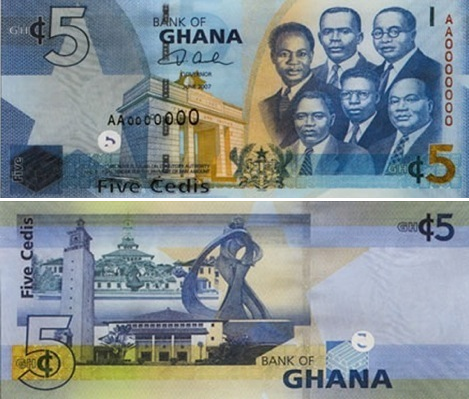
Kofi buys an orange for GH₵2. He pays with a GH₵5 note.
GH₵5 − GH₵2 = GH₵3
The seller gives Kofi GH₵3 change.
Try this:
- Abena buys a pen for GH₵3. She pays with GH₵5. How much change?
- Kwame buys groundnuts for GH₵4. He pays with GH₵10. How much change?
Always count your change!

26 / 37
Word problems: taking away
Read the story. Find the numbers. Decide if you must take away.
Story 1: There are 14 children in class. 3 children go home early. How many are left?
14 − 3 = 11 children.
Story 2: Kofi has 12 marbles. He loses 5. How many marbles does he have now?
12 − 5 = 7 marbles.
The words left, lost, ate, gave away and fewer often tell you to take away. Look for them when you read a story.
27 / 37
Try these taking-away stories
Read each story. Write the sum and the answer.
- Ama has 9 sweets. She gives 4 to her brother. How many sweets does she have left?
- There are 16 birds on a tree. 6 birds fly away. How many birds are still on the tree?
- Kwame has 20 bottle tops. He loses 10. How many are left?
- Mother cooks 13 balls of kenkey. The family eats 7. How many balls are left?
Draw pictures to help you. Cross out the ones that go away.
28 / 37
Add or take away?
Sometimes you must decide: is it adding or taking away?
Read these clues:
Add when things are put together, there are more, or you want to know altogether.
Take away when things are removed, eaten, lost, given away, or you want to know how many are left.
Try this: Say add or take away.
- Ama has 6 pencils. She buys 3 more.
- Kofi has 8 oranges. He eats 2.
- There are 10 goats. 4 run away.
- Abena has 5 beads. Her friend gives her 5 more.
29 / 37
Adding and taking away are friends
Adding and taking away are opposites. One undoes the other.
If 4 + 3 = 7, then:
- 7 − 3 = 4
- 7 − 4 = 3
Three numbers, four sums! This is a fact family.
Try this: Make a fact family for 2, 6 and 8.
- 2 + 6 = ?
- 6 + 2 = ?
- 8 − 2 = ?
- 8 − 6 = ?
30 / 37
Check your answer
A good mathematician always checks.
Kofi says 9 + 4 = 12. Is he right?
Check: count on from 9: 10, 11, 12, 13. So 9 + 4 = 13. Kofi made a mistake. That is fine! Now he knows.
Another way to check: take away. 13 − 4 = 9. Yes! So 13 is correct.
Try this: Ama says 15 − 6 = 8. Check it. Count on from 6 to 15, or add 8 + 6. Is Ama right?
31 / 37
Missing numbers
Sometimes a number is hidden. Find it!
5 + ? = 8
Think: 5 and what make 8? Count on from 5 to 8: 6, 7, 8. That is 3. So 5 + 3 = 8.
? − 2 = 6
Think: what number take away 2 is 6? Add 6 + 2 = 8. So 8 − 2 = 6.
Try this:
- 4 + ? = 10
- 7 + ? = 12
- 10 − ? = 7
- ? + 5 = 15
32 / 37
A market shopping list
Abena goes to the market with GH₵20.
She buys:
- Tomatoes: GH₵5
- Onions: GH₵3
- Smoked fish: GH₵8
How much does she spend? 5 + 3 = 8. Then 8 + 8 = GH₵16.
How much does she have left? 20 − 16 = GH₵4.
Try this: Kofi has GH₵15. He buys bread for GH₵6 and eggs for GH₵4. How much does he spend? How much is left?
33 / 37
What we have learnt
Well done! You can now:
- Add by putting groups together.
- Count on from the big number.
- Use number bonds to 5 and 10.
- Use doubles and make 10 first.
- Take away by counting back.
- Use number bonds to subtract.
- Solve word problems with cedis and market items.
- Check your answers.
Keep practising with stones, bottle tops and fingers. Numbers are everywhere: at home, at school and at the market!
34 / 37
Learn more
- Khan Academy Kids — a free app with adding and subtracting games for young children
- BBC Bitesize Primary — short lessons and games on early maths
- Ghanaian cedi on Wikipedia — pictures of our notes and coins
- NaCCA — Ghana's curriculum body, where the Basic 1 maths standards come from
35 / 37
Watch more
36 / 37
Think about it
- Which pairs of numbers make 10? Can you say all of them?
- Why is it easier to start with the big number when you count on?
- If you have GH₵10 and spend GH₵6, how do you work out what is left?
- What words in a story tell you to add? What words tell you to take away?
- Can you make up your own market word problem for a friend?
37 / 37
This book is for reading on SchoolSpec and cannot be printed.