Science
Living and Non-Living Things
Living and non-living things
What living things do — grow, eat, move, breathe — and how to sort the things around us.
Look around you
Look around. What can you see?
A goat. A tree. A stone. A bucket. A hen. A chair.
Some of these things are alive. Some are not alive.
The goat is alive. The stone is not alive.
In this book we will learn how to tell the difference. We will find out what living things do, and we will sort things into two groups: living and non-living.
Try this: Name three things you can see right now. Do you think they are alive?

2 / 34
Living things
A living thing is alive.
People are living things. You are a living thing!
Animals are living things: goats, hens, dogs, fish, lizards, butterflies.
Plants are living things: mango trees, maize, grass, flowers, cassava.
All living things do special things. They:
- grow
- eat (or make food)
- move
- breathe
- have babies or seeds
Let us look at each one.
3 / 34
Non-living things
A non-living thing is not alive.
- a stone
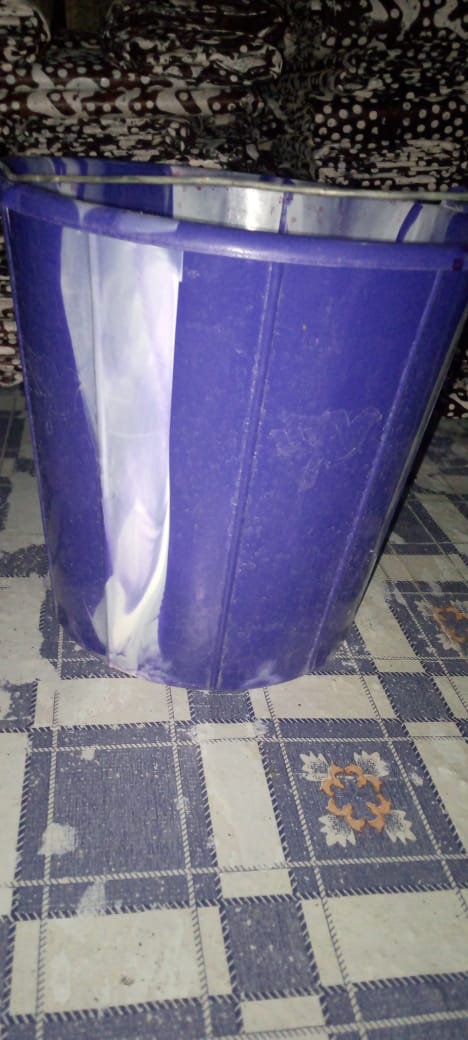
- a bucket
- a chair
- a book
- a car
- a cup
- water
- sand
Non-living things do not grow. They do not eat. They do not breathe. They do not have babies.
A trotro moves, but it does not move by itself. A person drives it. A trotro is non-living.
Try this: Find five non-living things in your classroom. Say their names.
4 / 34
Living things grow
Living things grow. They get bigger.
A baby grows into a child. A child grows into a man or a woman.
A small chick grows into a big hen.
A tiny seed grows into a tall mango tree.
Kofi was a small baby. Now he is six years old and he is taller. He is still growing!
A stone does not grow. It stays the same size for ever.
Try this: Ask your mother or father how tall you were when you were born. Look at how tall you are now!
5 / 34
Watch a seed grow
Ama planted a maize seed in a tin of soil. She watered it every day.
- Day 1: Just soil.
- Day 4: A tiny green shoot!
- Day 10: Two little leaves.
- Day 20: A tall green plant.
The seed grew because it is living.
Try this: Plant a bean or maize seed in a tin with soil. Put it near a window. Water it a little every day. Draw what you see each week.

6 / 34
Living things eat
Living things need food. Food gives them energy to grow and move.
You eat rice, kenkey, fish, fruit and vegetables.
A goat eats grass and leaves.
A hen eats grains and insects.
A cat eats fish and meat.
What about plants? Plants do not eat like us. They make their own food using sunlight, water and air. That is why plants need the sun!
A chair does not eat. A bucket does not eat. They are non-living.
Try this: What did you eat today? What does your family's goat or hen eat?
7 / 34
Living things drink
All living things need water.
You drink water every day. If you do not drink, you feel thirsty and weak.
A dog drinks water from a bowl.
A goat drinks from a stream or a bucket.
A plant drinks water through its roots in the soil. If you forget to water a plant, its leaves go soft and droop.
Try this: Take two small plants. Water one every day. Do not water the other. After a week, look at both. What do you see?
8 / 34
Living things move
Living things move by themselves.
A goat walks and runs. A bird flies. A fish swims. A snake slides. You walk, run, jump and dance!
Plants move too, but slowly. A sunflower turns to face the sun. A plant's leaves grow towards the light.
Non-living things cannot move by themselves. A ball only moves when you kick it. A stone only moves when you throw it.
Try this: Stand up. Show how a goat moves. Show how a bird moves. Show how a fish moves.

9 / 34
Living things breathe
Living things breathe. They take in air.
Put your hand on your chest. Breathe in. Breathe out. Feel your chest go up and down. You are breathing!
A dog breathes. Watch its sides move in and out when it sleeps.
A fish breathes under water using its gills.
Plants breathe too, through tiny holes in their leaves. You cannot see the holes, but they are there.
A stone does not breathe. A table does not breathe.
Try this: Run on the spot for a short time. Now feel your breathing. Is it faster?
10 / 34
Living things have babies
Living things make new living things.
A hen lays eggs. The eggs hatch into chicks.
A goat has kids. A dog has puppies. A cat has kittens.
People have babies.
A mango tree makes mangoes. Inside each mango is a seed. The seed can grow into a new mango tree.
Non-living things cannot make new things. A chair cannot make a baby chair!
Try this: Name the baby of each: hen, goat, cat, dog, cow.

11 / 34
Living things feel
Living things can feel things around them.
Touch something hot and you pull your hand away fast. You feel the heat.
A dog hears a noise and turns its head. It feels, hears and sees.
Touch a snail and it goes into its shell.
Even a plant feels. Some plants close their leaves when you touch them.
A stone does not feel anything. You can touch it, kick it or shout at it. It does not notice.
Try this: Close your eyes. What can you hear? What can you smell? You are using your senses because you are alive.
12 / 34
Living things can die
Living things are alive, so one day they die.
A flower blooms, then after some days it dries up and dies.
A fish out of water will die.
A plant with no water or no sun will die.
Non-living things do not die, because they were never alive. A broken cup is just broken. It did not die.
This is one more way to tell living from non-living.
Try this: Pick a leaf from a plant. Leave it in the sun for a day. What happens to it?
13 / 34
Is a plant really alive?
A plant does not run or shout. So is it really alive?
Yes! Let us check:
- Does it grow? Yes — from a seed to a tree.
- Does it need food and water? Yes — it makes food from sunlight and drinks through its roots.
- Does it move? Yes, slowly — it turns to the light.
- Does it breathe? Yes — through its leaves.
- Does it make new plants? Yes — with seeds.
- Can it die? Yes.
A plant does all the living things. So a plant is living.

14 / 34
Is a car alive?
A car moves. It makes noise. It drinks petrol. Is it alive?
No! Let us check:
- Does it grow? No. A small car never becomes a big car.
- Does it breathe? No.
- Does it move by itself? No. A driver makes it move.
- Does it have baby cars? No!
A car is a non-living thing. People made it.
The same is true for a trotro, a bicycle, a radio and a phone.
Try this: A fan moves. Is a fan alive? Use the check-list to find out.
15 / 34
Things that were once alive
Some things are not alive now, but they were alive once.
- A wooden chair was once a tree.
- A dry leaf on the ground was once part of a plant.
- Smoked fish at the market was once a fish swimming in the sea.
- A feather was once on a bird.
These things do not grow, eat or breathe now. So we call them non-living. But they came from living things.
Try this: Find something in your home that came from a plant or an animal. What was it before?
16 / 34
Things that were never alive
Some things were never alive at all.
- stones and rocks
- sand
- water
- the sun
- a plastic bucket
- a metal pot
- glass
These things never grew. They never ate. They never breathed.
So there are two kinds of non-living things: things that were once alive (wood, paper, leather) and things that were never alive (stone, water, plastic).
Try this: Look at your pencil. The wood was once a tree. The lead was never alive. One pencil, two kinds of non-living!
17 / 34
The living things check-list
Here is a check-list. Ask these questions about anything:
- Does it grow?
- Does it need food and water?
- Does it move by itself?
- Does it breathe?
- Does it feel?
- Can it make babies or seeds?
If the answer is yes to all of them, it is living.
If the answer is no, it is non-living.
Try this: Use the check-list on a cat. Then use it on a cup.

18 / 34
Sorting: living or non-living?
Kofi's teacher gave the class some pictures. They sorted them into two groups.
Living: goat, hen, mango tree, grass, butterfly, Kofi
Non-living: stone, bucket, chair, trotro, pot, water
Try this: Sort these into living and non-living.
- a lizard
- a book
- a cocoa tree
- a bicycle
- a fish
- a cup
- a baby
- sand
Say why you put each one in its group.
19 / 34
Sorting in the classroom
Walk around your classroom with a friend. Find things and sort them.
Make two lists in your exercise book:
| Living | Non-living |
|---|---|
| my friend | desk |
| a plant in a pot | chalk |
| a fly | window |
| ... | ... |
Which list is longer? In most classrooms, there are more non-living things than living things.
Try this: Now do the same at home. Is the home list different from the classroom list?
20 / 34
Sorting at the market
Ama went to the market. She saw many things.
Living things at the market: live hens, live crabs, live snails, the sellers, the buyers, a goat tied to a post.
Non-living things at the market: tomatoes (already picked), baskets, bowls, sacks of rice, money, plastic bags, tables.
Wait — are tomatoes living? A tomato on a plant is part of a living thing. Once it is picked, it will not grow any more. Most people put picked fruit in the non-living group.
Try this: Next time you visit the market, count the living things you see.
21 / 34
Sorting animals and plants
Living things come in two big groups: animals and plants.
Animals move from place to place. They eat other things. Goats, hens, dogs, fish, lizards, ants and people are animals.
Plants stay in one place. They make their own food from sunlight. Trees, grass, maize, cassava and flowers are plants.
Try this: Sort these into animals and plants.
- cat
- orange tree
- snail
- grass
- mosquito
- pawpaw tree
22 / 34
Living things need a home
Every living thing needs a place to live. We call it a habitat.
- A fish lives in water.
- A bird lives in a nest in a tree.
- A goat lives in a pen or walks around the compound.
- Ants live in the ground.
- A snail lives under leaves where it is damp.
- You live in a house!
Living things need their home to stay alive. A fish cannot live on land. You cannot live under water.
Try this: Where does a lizard live? Where does a hen sleep at night?
23 / 34
Looking after living things
Because living things grow, eat, drink and breathe, they need care.
If you have a pet or a farm animal:
- Give it clean water every day.
- Give it food.
- Give it a safe, dry place to sleep.
- Do not hit it or frighten it.
If you have a plant:
- Water it.
- Give it sunlight.
- Keep goats away from it!
Try this: What does your family do to care for the animals or plants at home?
24 / 34
Looking after yourself
You are a living thing too! You need care.
- Eat good food: fruit, vegetables, fish, beans, rice.
- Drink clean water.
- Sleep enough at night so you can grow.
- Move: run, play, dance.
- Breathe fresh air — go outside and play.
- Wash your hands and body so germs do not make you sick.
When you look after your body, you grow strong and healthy.
Try this: What did you do today to care for your body?

25 / 34
Non-living things help living things
Non-living things are not alive, but living things need them!
- We need water to drink.
- We need air to breathe.
- Plants need soil and sunlight.
- We use a pot to cook and a bucket to carry water.
- A bird uses sticks to build its nest.
So living and non-living things work together.
Try this: Name three non-living things you used today. What did you use them for?
26 / 34
Abena's garden
Abena has a little garden behind her house. Let us sort what is in it.
Living: a pepper plant, a pawpaw tree, grass, a lizard on the wall, ants, a hen walking about, Abena herself.
Non-living: a watering can, a hoe, stones around the edge, the fence, a plastic chair, the soil.
The living things in the garden need the non-living things: the soil holds the plant, the watering can brings water.
Try this: Draw Abena's garden. Colour the living things green. Colour the non-living things brown.
27 / 34
Living or non-living? A game
Play this with your class. The teacher says a word. If it is living, stand up and move. If it is non-living, sit still like a stone.
- hen
- rock
- baby
- spoon
- grass
- bus
- butterfly
- cup
- teacher
- water
How many did you get right?
Try this: Now you be the teacher. Say ten things for your friends to sort.
28 / 34
Tricky ones
Some things are tricky. Let us think.
Fire moves and grows and needs air. Is it alive? No. Fire does not eat food, breathe, feel or have babies. It is non-living.
A cloud moves across the sky. Is it alive? No. It is just water in the air.
A seed does not move or eat. Is it alive? Yes! It is resting. Give it water and soil and it will grow.
An egg sits still. Is it alive? Yes! A chick is growing inside.
Try this: Is a river alive? Use the check-list.
29 / 34
Make a living things poster
Work with a friend. Get a big sheet of paper.
- Draw a line down the middle.
- On the left, write LIVING. On the right, write NON-LIVING.
- Draw or stick pictures on each side.
- Under each living thing, write one thing it does: grows, eats, moves, breathes.
Put your poster on the classroom wall. Tell the class about it.
Try this: Find at least five things for each side of the poster.
30 / 34
What we have learnt
Well done! You can now:
- Say what a living thing is.
- Say what a non-living thing is.
- Know that living things grow, eat, drink, move, breathe, feel and have babies.
- Know that plants are living, even though they are slow.
- Know that cars and trotros are non-living, even though they move.
- Sort things into living and non-living.
- Know that some non-living things were once alive (wood, paper).
- Care for living things, including yourself!
Keep looking at the world around you. Science starts with looking!
31 / 34
Learn more
- Science Kids — fun facts, games and experiments for young scientists
- National Geographic Kids — pictures and stories about animals and plants
- BBC Bitesize Primary — short science lessons for early years
- Organism on Wikipedia — the grown-up word for a living thing
- NaCCA — Ghana's curriculum body, where the Basic 1 science standards come from
32 / 34
Watch more
33 / 34
Think about it
- What are four things that all living things do?
- A trotro moves. Why is it not a living thing?
- A tree does not walk. Why is it a living thing?
- Is a wooden chair living or non-living? Was it ever alive?
- What do you need every day to stay alive and grow?
- Can you think of something that is hard to sort? Why is it hard?
34 / 34
This book is for reading on SchoolSpec and cannot be printed.