Mathematics
Tens and Ones
Place value — tens and ones
Bundle into tens, read any number up to 100, compare and order numbers, and count cedis and pesewas.
Counting past ten
Ama helps her mother sell oranges at the market. One customer wants a lot of oranges. Ama counts: one, two, three... all the way to twenty-three.
That is a big number to hold in your head! How can we be sure we counted right?
In this book you will learn a clever trick that people have used for thousands of years. We put things into groups of ten. Then we count the tens and the ones that are left over.
By the end, you will read and write any number up to 100, say which of two numbers is bigger, put numbers in order, and count money in cedis and pesewas.
Let's begin with a bundle of sticks.
2 / 38
Ten is a bundle
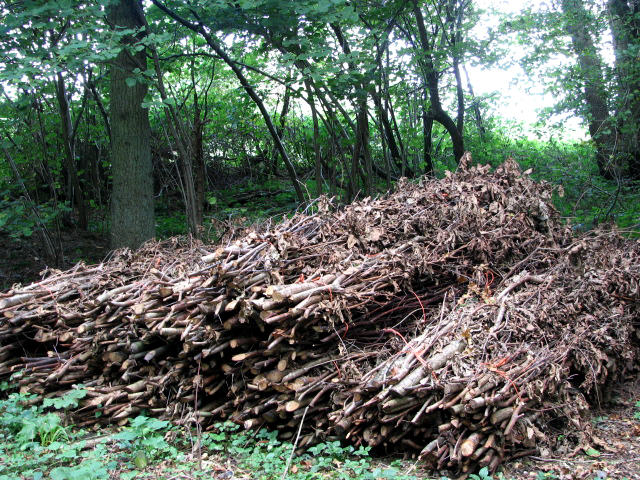
Kofi has a pile of broomsticks. He counts out ten and ties them together with a string. That is one bundle. One bundle means ten sticks.
He makes another bundle. Now he has two bundles. Two bundles means twenty sticks.
Bundling helps us count quickly. We do not count every single stick. We count the bundles, then the loose sticks that are left.
Try this: Collect some sticks, straws or bottle tops. Count out ten and tie them, or put them in a cup. Keep going until you cannot make another full group of ten. How many bundles? How many loose ones?
3 / 38
Tens and ones
Every number up to 99 is made of tens and ones.
Look at the number 13. If we bundle thirteen sticks, we get one bundle of ten and three loose sticks.
- 1 ten
- 3 ones
So 13 means "one ten and three ones". The 1 stands for a whole bundle. The 3 stands for the loose sticks.
The place where a digit sits tells us its value. We call this place value. The same digit can mean ten things or one thing, depending on where it stands.
4 / 38
Try this: seventeen
Abena has seventeen groundnuts.
She puts ten groundnuts in a small bowl. That is one ten. She counts what is left: seven groundnuts. That is seven ones.
So 17 = 1 ten and 7 ones.
Now you try. Say how many tens and how many ones are in each number. Use your own sticks or stones if it helps.
- 15
- 12
- 19
- 11
- 10
Remember, 10 is one full bundle with zero loose ones. We write the zero to show the ones place is empty.
5 / 38
The place value chart
A place value chart has two columns. The left column is for tens. The right column is for ones.
| Tens | Ones |
|---|---|
| 2 | 6 |
This chart shows the number 26. There are two tens (twenty) and six ones. Twenty and six make twenty-six.
The tens column is always on the left. The ones column is always on the right. Keep that order in your head: tens, then ones.
Try this: Draw a chart in your exercise book. Write 34 in it. Which digit goes under Tens? Which goes under Ones?
6 / 38
Reading two-digit numbers
A number with two digits has a tens digit and a ones digit. We read the tens first, then the ones.
- 24 → twenty-four
- 58 → fifty-eight
- 91 → ninety-one
The tens digit tells you the "ty" word: twenty, thirty, forty, fifty, sixty, seventy, eighty, ninety. Then you say the ones.
Try this: Read these numbers out loud to a friend. Then write them in words.
- 37
- 62
- 85
- 46
Kwame reads 62 as "sixty-two". Can you hear the six tens and the two ones in the word?
7 / 38
Zero in the ones place
Some numbers have nothing in the ones place. They are made of whole bundles only.
- 20 = 2 tens and 0 ones
- 50 = 5 tens and 0 ones
- 90 = 9 tens and 0 ones
The zero is important. It holds the ones place so the tens digit stays in the tens column. If we forget to write it, 20 would look like 2, and that is a very different number!
Think of a trotro with 20 seats. It has two rows of ten. Every seat is in a full row of ten, with none left over.
Try this: Write all the numbers from 10 to 100 that have a zero in the ones place.
8 / 38
Blocks for tens and ones
In school we often use place value blocks. A long rod is one ten. A small cube is one.
A rod is made of ten cubes joined together. So one rod is worth exactly the same as ten loose cubes.
Look at the picture. Can you see the rods and the small cubes? To show a number, we lay out some rods for the tens and some cubes for the ones.
If you do not have blocks, you can draw them. Draw a tall line for each ten and a small dot for each one.

9 / 38
Worked example: 36 with blocks
Let us show 36 with blocks.
First, the tens digit is 3. So we put out 3 rods. That is thirty.
Next, the ones digit is 6. So we put out 6 cubes. That is six.
Three rods and six cubes together show thirty-six.
Now count to check: 10, 20, 30... then 31, 32, 33, 34, 35, 36. Yes!
Here is a drawing of the idea. Each tall bar is a ten and each small square is a one.

10 / 38
Try this: build 42
Use blocks, sticks or drawings to build these numbers. For each one, say how many tens and how many ones.
- 42
- 27
- 70
- 15
- 99
Then do it backwards. Your friend lays out some rods and cubes. You say the number.
Here is one to start: 5 rods and 3 cubes. What number is it? Count the tens first: 10, 20, 30, 40, 50. Then the ones: 51, 52, 53. The number is 53.
11 / 38
Counting in tens
If you count in tens, you reach 100 very fast.
10, 20, 30, 40, 50, 60, 70, 80, 90, 100.
Each jump adds one more bundle. Say it out loud and clap on every number. Count the fingers on ten children: that is 100 fingers!
Counting in tens helps you find the tens digit quickly. If you have seven bundles, you do not need to count every stick. Just say "10, 20, 30, 40, 50, 60, 70". Seventy.
Try this: Start at 10 and count in tens to 100. Then start at 100 and count backwards in tens to 10.
12 / 38
Teen numbers are tricky
The numbers from 11 to 19 have strange names. "Fourteen" sounds like "forty", but they are very different.
- 14 = 1 ten and 4 ones (fourteen)
- 40 = 4 tens and 0 ones (forty)
Listen carefully. "Four-teen" means four and ten. "For-ty" means four tens.
Here are the teen numbers: eleven, twelve, thirteen, fourteen, fifteen, sixteen, seventeen, eighteen, nineteen. Every one of them has exactly one ten.
Try this: Say each pair out loud and tell a friend which one is bigger: 13 and 30, 15 and 50, 18 and 80.
13 / 38
Swapping the digits
What happens if we swap the digits of a number?
25 means 2 tens and 5 ones. Twenty-five.
52 means 5 tens and 2 ones. Fifty-two.
They use the same digits, but they are not the same number. 52 is much bigger than 25, because it has more tens.
This is why place matters so much. The digit on the left is worth ten times more than the same digit on the right.
Try this: Write these numbers, then swap the digits and write the new number. Which is bigger each time?
- 16
- 38
- 41
14 / 38
Ten more, ten less
Adding ten means adding one more bundle. Only the tens digit changes.
- 23 + 10 = 33
- 47 + 10 = 57
Taking away ten means removing one bundle.
- 68 − 10 = 58
- 31 − 10 = 21
The ones digit stays the same. Only the tens digit goes up or down by one.
Try this: Kofi has 35 bottle tops. His sister gives him 10 more. How many now? Then he gives 10 to a friend. How many does he have now?
15 / 38
One more, one less
Adding one means one more loose stick. Usually only the ones digit changes.
- 42 + 1 = 43
- 42 − 1 = 41
But watch out at the edge of a bundle! When the ones reach ten, they turn into a new bundle.
- 39 + 1 = 40 (nine ones and one more make a full ten)
- 40 − 1 = 39 (open one bundle to take one away)
Try this: Write the number that is one more and one less than each of these: 27, 59, 80, 99.
16 / 38
Expanded form
We can write a number as a sum of its tens and ones. This is called expanded form.
- 47 = 40 + 7
- 83 = 80 + 3
- 60 = 60 + 0
The first part is the value of the tens digit. The second part is the ones.
Going the other way: 30 + 5 = 35.
Expanded form shows exactly what each digit is worth. The 4 in 47 is not just four. It is forty.
Try this: Write in expanded form: 56, 72, 19, 90.
17 / 38
Try this: put it back together
Now go the other way. Join the tens and ones to make one number.
- 20 + 4 = ?
- 70 + 9 = ?
- 50 + 0 = ?
- 10 + 8 = ?
- 90 + 1 = ?
Abena did the first one like this: "Twenty and four more. Twenty-one, twenty-two, twenty-three, twenty-four. The answer is 24."
Check your answers by building each number with blocks or drawing tens and ones.
18 / 38
One hundred
What happens when we have ten bundles of ten?
Ten tens make one hundred. We write it 100. It has three digits: a 1, then two zeros.
100 is the first number that needs a new place: the hundreds place. In the picture, a child has arranged blocks to show how ten rods fit together in one big square flat.
We say: "ten, twenty, thirty, forty, fifty, sixty, seventy, eighty, ninety, one hundred." Ten jumps of ten land exactly on 100.

19 / 38
Which is bigger?
To compare two numbers, look at the tens first.
Is 62 bigger than 48? The tens digits are 6 and 4. Six tens is more than four tens. So 62 is bigger. We do not even need to look at the ones.
What if the tens are the same? Then compare the ones.
Is 35 bigger than 38? Both have 3 tens. Now look at the ones: 5 and 8. Eight is bigger, so 38 is bigger.
Tens first, ones second. That is the rule.
20 / 38
The greater than and less than signs
We use two signs to compare numbers.
- > means "is greater than"
- < means "is less than"
Think of the sign as a hungry crocodile's mouth. The mouth always opens towards the bigger number, because the crocodile wants the bigger meal!
- 62 > 48 (62 is greater than 48)
- 35 < 38 (35 is less than 38)
If two numbers are the same, we use the equals sign: 50 = 50.
Try this: Draw a crocodile mouth between each pair, opening towards the bigger number: 23 and 32, 71 and 17, 45 and 45.
21 / 38
Worked example: 38 and 83
Kwame and Ama are comparing 38 and 83.
Step 1: Look at the tens. 38 has 3 tens. 83 has 8 tens.
Step 2: Eight tens is more than three tens. So 83 is bigger.
Step 3: Write it with a sign: 83 > 38, or 38 < 83.
Ama says, "It's the same two digits!" Kwame says, "Yes, but place value changes everything. The 8 in 83 is eighty. The 8 in 38 is only eight."
Both of them are right. The digits are the same, but their places are not.
22 / 38
Try this: compare
Write >, < or = between each pair. Remember: tens first, then ones.
- 54 ___ 45
- 29 ___ 92
- 67 ___ 67
- 80 ___ 79
- 13 ___ 31
- 46 ___ 48
For number 4, be careful. 80 has 8 tens and 79 has 7 tens. Even though 79 has a big ones digit, 80 still wins because it has more tens.
Check your work with a friend. Did you both get the same answers?
23 / 38
Putting numbers in order
Sometimes we have more than two numbers. We can put them in order from smallest to largest. This is called ascending order, like climbing up stairs.
Or we can go from largest to smallest. This is called descending order, like walking down stairs.
To order numbers, compare the tens digits first. The smallest tens digit gives the smallest number. If two numbers share a tens digit, use the ones to decide.
Order these from smallest to largest: 31, 13, 23.
Tens: 3, 1, 2. So the order is 13, 23, 31.
24 / 38
Worked example: 54, 45 and 50
Abena must order 54, 45 and 50 from smallest to largest.
Step 1: Look at the tens. 54 has 5 tens. 45 has 4 tens. 50 has 5 tens.
Step 2: The smallest tens digit is 4. So 45 comes first.
Step 3: Now 54 and 50 both have 5 tens. Compare the ones: 4 and 0. Zero is smaller, so 50 comes before 54.
The order is: 45, 50, 54.
From largest to smallest it would be: 54, 50, 45.
25 / 38
Try this: order
Put each set in order from smallest to largest.
- 27, 72, 20
- 65, 56, 66
- 90, 19, 91, 9
- 40, 14, 41, 44
Now write set 2 from largest to smallest.
Tip: In set 3, the number 9 has no tens at all. It is just nine ones. So it is the smallest of them all.
Kofi ordered set 1 like this: 20, 27, 72. Was he right?
26 / 38
Numbers on a line
A number line is a long line with numbers marked in order. Small numbers are on the left. Big numbers are on the right.
Imagine a line from 0 to 100 with a mark at every ten: 0, 10, 20, 30... up to 100.
Where does 35 go? It sits halfway between 30 and 40.
Where does 72 go? Just past 70, closer to 70 than to 80.
The further right a number is, the bigger it is. That is another way to compare numbers.
Try this: Draw a number line from 0 to 50. Mark 10, 20, 30, 40. Then put dots for 15, 28 and 43.
27 / 38
Money in Ghana
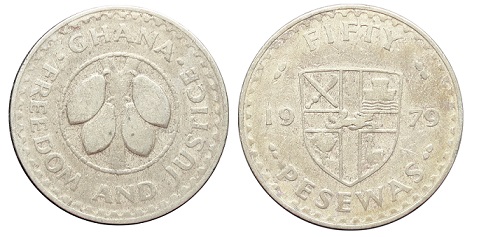
In Ghana we use the cedi. We write it like this: GH₵. The small coins are called pesewas, written Gp.
The coins you will see most often are 10 pesewas, 20 pesewas, 50 pesewas and the 1 cedi coin.
The notes are GH₵1, GH₵2, GH₵5, GH₵10, GH₵20, GH₵50, GH₵100 and GH₵200.
Money uses place value just like sticks and blocks. A GH₵10 note is like a bundle of ten. A GH₵1 coin is like a single stick.

28 / 38
Pesewas make a cedi
One hundred pesewas make one cedi. 100 Gp = GH₵1.
That is just like our blocks: ten tens make a hundred.
Two 50 pesewa coins make GH₵1. Five 20 pesewa coins make GH₵1. Ten 10 pesewa coins make GH₵1.
Ama has three 20 pesewa coins. She counts in twenties: 20, 40, 60. She has 60 pesewas. She needs 40 more pesewas to make one cedi.
Try this: Draw four 10 pesewa coins and one 50 pesewa coin. How many pesewas in total?
29 / 38
Counting cedis like tens and ones
Let us count money using place value.
Kofi's father gives him two GH₵10 notes and four GH₵1 coins.
- Two GH₵10 notes = 2 tens = GH₵20
- Four GH₵1 coins = 4 ones = GH₵4
Together that is GH₵24.
Count it out: "Ten, twenty... twenty-one, twenty-two, twenty-three, twenty-four."
The GH₵10 notes are our bundles. The GH₵1 coins and notes are our loose sticks. Place value makes counting money easy.

30 / 38
Worked example: Abena's savings
Abena has been saving in a tin. She empties it and finds: three GH₵10 notes, one GH₵5 note and two GH₵1 coins.
Step 1: Count the tens. Three GH₵10 notes = GH₵30.
Step 2: Count the rest. GH₵5 + GH₵1 + GH₵1 = GH₵7.
Step 3: Put them together. GH₵30 + GH₵7 = GH₵37.
In place value, that is 3 tens and 7 ones.
Notice that a GH₵5 note is not a ten. It goes with the ones, because five is less than ten.
31 / 38
At the market
At the market, every price is a number. Comparing prices is comparing numbers.
A bowl of tomatoes costs GH₵15. A bowl of pepper costs GH₵12. Which is cheaper?
Both have 1 ten. Compare the ones: 5 and 2. Two is smaller. So the pepper is cheaper. 12 < 15.
A yam costs GH₵8. A pineapple costs GH₵10. The yam has no tens, so it is cheaper.
Next time you go to the market, look at the prices and find the cheapest and the dearest thing you can see.

32 / 38
Try this: shopping with Kwame
Kwame has GH₵50. Here are the prices at the market:
- Kenkey: GH₵6
- Fish: GH₵25
- Oranges: GH₵9
- Rice: GH₵32
- Which item is the most expensive? Which is the cheapest?
- Put the four prices in order from smallest to largest.
- Kwame buys the fish. Does he still have more than GH₵20 left?
- Can he buy the rice and the fish with GH₵50? (Add the tens first, then the ones.)
Show your working with tens and ones.
33 / 38
Mistakes to watch for
Here are mistakes that many pupils make. Watch out for them!
Mixing up teen and "ty" numbers. Fourteen is 14. Forty is 40. Listen to the ending.
Forgetting the zero. Thirty is 30, not 3. The zero holds the ones place.
Comparing the ones first. 19 has a big ones digit, but 21 is bigger because it has more tens. Always look at tens first.
Writing digits backwards. Twenty-six is 26, with the tens digit on the left. Not 62.
Try this: Find the mistake. Ama wrote "sixteen = 61". What should she have written?
34 / 38
What we learned
Well done! Here is everything from this book in one place.
- We bundle into groups of ten.
- A two-digit number has a tens digit on the left and a ones digit on the right.
- 10 tens make 100.
- Expanded form: 47 = 40 + 7.
- To compare, look at the tens first, then the ones. Use > and <.
- To order, start with the smallest tens.
- Money uses place value: a GH₵10 note is a ten, and 100 pesewas make GH₵1.
Keep practising with sticks, stones, bottle tops and coins. Place value is the key to all the bigger numbers you will meet in Basic 3.
35 / 38
Learn more
- Khan Academy: Place value (tens and hundreds) — short videos and practice questions on tens and ones
- Maths is Fun: Place value — a simple page that explains place value with pictures
- BBC Bitesize: Place value — lessons and quizzes on reading and comparing numbers
- Ghanaian cedi on Wikipedia — pictures of all the coins and notes we use in Ghana
- NaCCA — the body that writes Ghana's school curriculum
36 / 38
Watch more
37 / 38
Think about it
- Why do we count in groups of ten and not groups of seven?
- If you had 10 bundles of ten sticks, what number would you have?
- Which is worth more: three GH₵10 notes, or ten GH₵1 coins and two GH₵5 notes?
- A number has 4 tens and no ones. What is it? What is ten more than it?
- Can you think of something at home that comes in groups of ten?
38 / 38
This book is for reading on SchoolSpec and cannot be printed.