Mathematics
Fair Shares
Fractions
Halves, quarters and thirds, what the top and bottom numbers mean, equal fractions, and how to share food and money fairly.
What is a fraction?
Ama and Kofi have one orange. They want to share it fairly. Ama cuts it into two equal pieces and gives one to Kofi.
Each piece is one half of the orange. We write it like this: 1/2.
A fraction is a part of a whole. The whole can be one thing, like an orange, or a group of things, like ten pencils.
Fractions are everywhere in Ghana. A trader sells half a loaf of bread. A trotro is three-quarters full. Your mother says, "Give your brother a third of the kenkey."
In this book you will learn to read fractions, write them, draw them, and use them to share things fairly.
2 / 44
The whole
Before we cut anything, we need a whole.
A whole is the complete thing. One whole orange. One whole chocolate bar. One whole GH₵10 note. One whole class of 30 pupils.
When we write a fraction, we always ask: "A fraction of what?"
Half of a small orange is small. Half of a big watermelon is big. Both are halves, because each is one of two equal parts. But the wholes are different sizes.
Try this: Look around your classroom. Name three things that are "one whole". Then say what one half of each would look like.
3 / 44
Halves
When a whole is cut into two equal parts, each part is one half.
We write one half as 1/2. Say it: "one half".
Two halves make one whole: 1/2 + 1/2 = 1.
Kofi has one kenkey ball. He cuts it straight down the middle. Now there are two halves. He eats one half and keeps one half for later.
Careful! If Kofi cuts the kenkey so one piece is big and the other is small, those are not halves. Halves must be exactly the same size.
Try this: Fold a piece of paper so both parts match. Open it. You have made two halves. Colour one half.

4 / 44
Equal parts matter
The most important word in fractions is equal.
Abena draws a square and cuts it into four pieces. One piece is huge and three are tiny. Can she call one tiny piece "a quarter"? No. The parts are not equal.
Kwame draws the same square and cuts it into four pieces that are all the same size. Now each piece is a quarter.
Think of sharing. If you share a bar of chocolate with three friends, everyone wants the same amount. Fractions are the maths of fair sharing.
Try this: Draw a rectangle. Try to divide it into three equal parts. Then try to divide it into three parts that are not equal. Which one shows thirds?
5 / 44
Quarters
When a whole is cut into four equal parts, each part is one quarter.
We write one quarter as 1/4. Say it: "one quarter".
Four quarters make one whole: 1/4 + 1/4 + 1/4 + 1/4 = 1.
A quick way to make quarters: cut a whole in half, then cut each half in half again.
Ama's mother buys a round sponge cake for a birthday. She cuts it across one way, then across the other way. Now there are four equal quarters, one for each child.
Try this: Draw a circle. Draw one line across the middle. Draw another line from top to bottom. Count the parts. Colour three of them. You have coloured 3/4, three quarters.

6 / 44
Thirds
When a whole is cut into three equal parts, each part is one third.
We write one third as 1/3. Say it: "one third".
Three thirds make one whole: 1/3 + 1/3 + 1/3 = 1.
Thirds are harder to draw than halves or quarters, because you cannot just fold in half. You must measure three equal pieces.
Kofi, Kwame and Abena buy one big loaf of sugar bread to share on the way home. They cut it into three equal pieces. Each one gets one third.
Try this: Draw a long rectangle. Use a ruler to mark it into three equal parts. Colour two parts. You have coloured 2/3, two thirds.
7 / 44
Numerator and denominator
Every fraction has two numbers.
The bottom number is the denominator. It tells you how many equal parts the whole is cut into.
The top number is the numerator. It tells you how many of those parts we are talking about.
Look at 3/4:
- Denominator = 4. The whole is cut into 4 equal parts.
- Numerator = 3. We have 3 of those parts.
Say it: "three quarters".
A way to remember: Denominator is Down. The denominator is at the bottom.
Try this: For 2/3, say which number is the numerator and which is the denominator. What does each one tell you?
8 / 44
Reading and writing fractions
Here is how we say fractions in English:
- 1/2 = one half
- 1/3 = one third
- 2/3 = two thirds
- 1/4 = one quarter
- 3/4 = three quarters
- 1/5 = one fifth
- 1/6 = one sixth
- 1/8 = one eighth
- 1/10 = one tenth
After "half" and "third", most fractions end in -th. Fifth, sixth, eighth, tenth.
When the top number is more than 1, we add s: two thirds, three quarters, five eighths.
Try this: Write these fractions in numbers: four fifths, one eighth, three tenths. Then write these in words: 2/6, 5/8, 3/5.
9 / 44
Fractions of shapes
The picture shows circles cut into different numbers of equal parts, with some parts shaded.
To find the fraction that is shaded:
- Count all the equal parts. This is the denominator.
- Count the shaded parts. This is the numerator.
If a circle is cut into 8 parts and 3 are shaded, the shaded fraction is 3/8.
If a circle is cut into 6 parts and 5 are shaded, the shaded fraction is 5/6.
Try this: Look at the picture. For each circle, write the fraction that is shaded. Then write the fraction that is not shaded. What do the two fractions add up to?

10 / 44
Sharing one kenkey
Abena's mother gives her one ball of kenkey and says, "Share it with your two cousins."
That is three people and one kenkey. Abena cuts it into three equal parts. Each person gets 1/3.
Later, her little brother arrives. Now there are four people. If she had known, she would have cut it into four equal parts, and each person would get 1/4.
Notice: more people sharing means smaller pieces. 1/4 is smaller than 1/3.
Try this: If five friends share one kenkey equally, what fraction does each person get? What if ten friends share it?

11 / 44
Bigger denominator, smaller piece
This surprises many pupils. Look:
- 1/2 of a cake is a big piece.
- 1/4 of the same cake is smaller.
- 1/8 of the same cake is smaller still.
The denominator got bigger (2, 4, 8), but the piece got smaller.
Why? Because the whole was cut into more parts. More parts means each part is smaller.
Think of a watermelon. Cut it for 2 people, and each slice is huge. Cut it for 8 people, and each slice is thin.
Try this: Put these in order from biggest piece to smallest: 1/3, 1/10, 1/2, 1/5.

12 / 44
Comparing fractions with the same denominator
When two fractions have the same denominator, compare the numerators.
3/8 and 5/8. Both are eighths. 5 pieces is more than 3 pieces. So 5/8 is bigger than 3/8.
2/5 and 4/5. Both are fifths. 4/5 is bigger.
It is like comparing slices of the same cake. The pieces are the same size, so whoever has more pieces has more cake.
We can use the symbols > (bigger than) and < (smaller than):
- 5/8 > 3/8
- 2/5 < 4/5
Try this: Which is bigger? 3/10 or 7/10? 4/6 or 2/6? Write each answer using > or <.
13 / 44
Fractions on a strip
Draw a long strip and mark 0 at one end and 1 at the other. This strip is one whole.
Cut the strip into 4 equal spaces. The marks show 1/4, 2/4, 3/4, and then 4/4, which is the same as 1.
Now cut another strip into 2 equal spaces. The middle mark is 1/2.
Put the strips under each other. You will see that 1/2 sits exactly at the same place as 2/4. They are the same distance along the strip.
This is a big idea, and we will look at it on the next page.
Try this: Draw a strip and mark it into 3 equal spaces. Label 1/3 and 2/3.
14 / 44
Equivalent fractions
Two fractions are equivalent when they are the same amount, even though they use different numbers.
1/2 = 2/4
Think of a cake. Cut it in half and take one half. Now cut the same cake into quarters and take two quarters. You have the same amount of cake!
Look at the picture. The cake is cut into different fractions, but some of them cover exactly the same space.
More examples:
- 1/2 = 3/6
- 1/2 = 4/8
- 1/3 = 2/6
Try this: Draw two same-size rectangles. Colour 1/2 of the first and 2/4 of the second. Do they look the same?

15 / 44
Making equivalent fractions
Here is the trick. Multiply the top and the bottom by the same number.
Start with 1/2.
- Multiply top and bottom by 2: 2/4
- Multiply top and bottom by 3: 3/6
- Multiply top and bottom by 5: 5/10
All of these equal 1/2.
Start with 1/3.
- Multiply by 2: 2/6
- Multiply by 3: 3/9
- Multiply by 4: 4/12
Why does it work? When you multiply the bottom, you cut each piece into smaller pieces. When you multiply the top by the same number, you take more of those smaller pieces. The amount stays the same.
Try this: Write three fractions equivalent to 1/4.
16 / 44
The fraction wall
A fraction wall is a picture of bricks.
- The top row is one brick: 1 whole.
- The next row is two bricks: 1/2 and 1/2.
- Then three bricks: 1/3, 1/3, 1/3.
- Then four bricks of 1/4, and so on.
Every row is the same length as the whole.
With a fraction wall you can see equivalent fractions. Two bricks of 1/4 line up exactly with one brick of 1/2. Three bricks of 1/6 also line up with one brick of 1/2.
Try this: Draw your own fraction wall with rows for 1, 1/2, 1/4 and 1/8. Use a ruler so all rows are the same length. Then find every fraction equal to 1/2.
17 / 44
Simplest form
Sometimes a fraction can be written with smaller numbers.
4/8 is the same as 1/2. We say 1/2 is the simplest form.
To simplify, divide the top and bottom by the same number.
- 4/8: divide both by 4 → 1/2
- 6/9: divide both by 3 → 2/3
- 5/10: divide both by 5 → 1/2
A fraction is in simplest form when no number (except 1) can divide into both the top and the bottom.
Try this: Write in simplest form: 2/4, 3/9, 6/8, 5/15.
18 / 44
A fraction of a group
So far we have cut one thing into pieces. But a fraction can also be part of a group.
Ama has 10 mangoes. She gives half of them to Kofi. How many does Kofi get?
Half means share into 2 equal groups. 10 ÷ 2 = 5. Kofi gets 5 mangoes.
Kwame has 12 marbles. One quarter of them are blue. How many are blue?
One quarter means share into 4 equal groups. 12 ÷ 4 = 3. Three marbles are blue.
Rule: To find a fraction of a group, divide by the denominator.
Try this: What is half of 16? What is one quarter of 20?
19 / 44
One third of a group
Abena has 15 oranges. She keeps one third for the family and sells the rest.
One third means share into 3 equal groups. 15 ÷ 3 = 5. She keeps 5 oranges.
Try it with counters or stones. Put 15 stones on the table. Make 3 equal piles. Each pile has 5. That is one third.
Here are more:
- 1/3 of 9 = 9 ÷ 3 = 3
- 1/3 of 18 = 18 ÷ 3 = 6
- 1/3 of 30 = 30 ÷ 3 = 10
Try this: Find one third of 12, one third of 21 and one third of 24. Use stones if it helps.
20 / 44
The two-step method
What about two thirds or three quarters of a group? Use two steps.
Find 2/3 of 12.
- Step 1: Find 1/3. 12 ÷ 3 = 4.
- Step 2: Multiply by the top number. 4 × 2 = 8.
So 2/3 of 12 is 8.
Find 3/4 of 20.
- Step 1: Find 1/4. 20 ÷ 4 = 5.
- Step 2: 5 × 3 = 15.
So 3/4 of 20 is 15.
Remember: Divide by the bottom, multiply by the top.
Try this: Find 2/3 of 15, 3/4 of 12 and 2/5 of 10.
21 / 44
Worked example: pupils in the class
There are 30 pupils in Basic 4. Two thirds of them walk to school. How many pupils walk to school?
- Step 1: 30 ÷ 3 = 10. So one third is 10 pupils.
- Step 2: 10 × 2 = 20.
20 pupils walk to school.
How many do not walk? 30 − 20 = 10 pupils. That is the other third.
Check: 20 + 10 = 30. Correct.
Try this: In a class of 24, three quarters bring their own lunch. How many bring lunch? How many do not?
22 / 44
Sharing oranges fairly
Kofi's uncle brings home a bag of 20 oranges. He says:
- "Kofi, take one quarter."
- "Ama, take one half."
- "Give the rest to your mother."
Kofi: 1/4 of 20 = 20 ÷ 4 = 5 oranges. Ama: 1/2 of 20 = 20 ÷ 2 = 10 oranges. Mother: 20 − 5 − 10 = 5 oranges.
What fraction did their mother get? 5 out of 20 is 5/20, which simplifies to 1/4.
Try this: A bag has 16 bananas. Abena takes one half, Kwame takes one quarter. How many are left? What fraction is left?
23 / 44
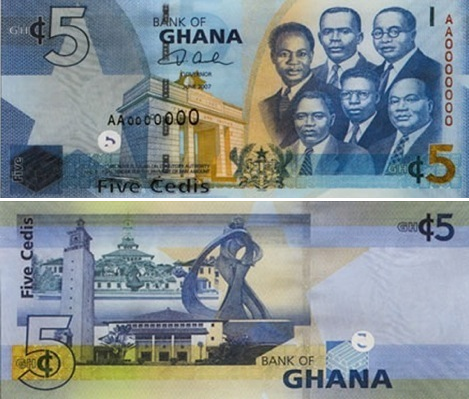
Fractions of money
Fractions work with Ghana cedis too.
Ama's father gives her GH₵10 and says, "Spend half, save half."
Half of GH₵10 = 10 ÷ 2 = GH₵5 to spend, GH₵5 to save.
Kwame has GH₵20. He gives one quarter to his sister.
One quarter of GH₵20 = 20 ÷ 4 = GH₵5. He keeps GH₵15.
Abena earns GH₵12 helping at the market. She spends one third on a snack.
One third of GH₵12 = 12 ÷ 3 = GH₵4.
Try this: You have GH₵30. You save one third. How much do you save? How much is left?
24 / 44
Half of a cedi
Sometimes half of an amount gives pesewas.
There are 100 pesewas in GH₵1.
Half of GH₵1 = 100 ÷ 2 = 50 pesewas (GH₵0.50).
Quarter of GH₵1 = 100 ÷ 4 = 25 pesewas (GH₵0.25).
Half of GH₵5 = half of 500 pesewas = 250 pesewas = GH₵2.50.
Half of GH₵3 = half of 300 pesewas = 150 pesewas = GH₵1.50.
So if two friends share the cost of a GH₵3 bottle of water, each one pays GH₵1.50.
Try this: Three friends share a GH₵6 bag of sachet water equally. How much does each pay? Two friends share a GH₵7 snack. How much each?
25 / 44
At the market
Abena goes to the market with GH₵40.
- She spends one quarter on tomatoes. 40 ÷ 4 = GH₵10.
- She spends one half on rice. 40 ÷ 2 = GH₵20.
- She keeps the rest.
Total spent: 10 + 20 = GH₵30. Left over: 40 − 30 = GH₵10.
What fraction is left? 10 out of 40 is 10/40, which simplifies to 1/4.
Check with fractions: 1/4 (tomatoes) + 1/2 (rice) + 1/4 (left) = 1 whole. It works!
Try this: Kofi has GH₵24. He spends one third on a book and one half on lunch. How much is left?
26 / 44
A chocolate bar
A chocolate bar is divided into 10 equal pieces. The whole bar is 10/10.
Kwame eats 3 pieces. He has eaten 3/10 of the bar.
How much is left? 10 − 3 = 7 pieces. 7/10 of the bar is left.
Notice that 3/10 + 7/10 = 10/10 = 1 whole bar.
Ama eats half the bar. Half of 10 pieces is 5 pieces. So 1/2 of this bar is the same as 5/10.
Try this: A bar has 12 pieces. You eat 4. What fraction did you eat? What fraction is left? Write both in simplest form.

27 / 44
Adding fractions with the same bottom
When fractions have the same denominator, add the numerators. Keep the denominator the same.
1/4 + 2/4 = 3/4
Think: one quarter of a cake plus two quarters of a cake is three quarters of a cake.
1/5 + 3/5 = 4/5
2/8 + 3/8 = 5/8
Do not add the bottoms! 1/4 + 1/4 is not 2/8. It is 2/4, which is one half. Two quarters of a cake is half a cake, not a quarter of a cake.
Try this: Work out 2/6 + 3/6, 1/3 + 1/3 and 3/10 + 4/10.
28 / 44
Taking away fractions
Taking away works the same way. Same denominator: subtract the tops, keep the bottom.
3/4 − 1/4 = 2/4 = 1/2
Kofi had three quarters of a loaf. He ate one quarter. Now he has two quarters, which is half a loaf.
5/6 − 2/6 = 3/6 = 1/2
1 − 1/3: One whole is 3/3. So 3/3 − 1/3 = 2/3.
If Ama drinks one third of a bottle of water, two thirds are left.
Try this: Work out 7/8 − 3/8, 4/5 − 1/5 and 1 − 1/4.
29 / 44
Fractions of an hour
A clock is a circle, so fractions fit it well.
One hour is 60 minutes.
- Half an hour = 60 ÷ 2 = 30 minutes.
- Quarter of an hour = 60 ÷ 4 = 15 minutes.
- Three quarters of an hour = 15 × 3 = 45 minutes.
When we say "quarter past seven", we mean 15 minutes after 7 o'clock. "Half past seven" means 30 minutes after. "Quarter to eight" means 45 minutes after seven, which is 15 minutes before eight.
School break is half an hour. That is 30 minutes.
Try this: Your trotro ride is three quarters of an hour. How many minutes is that? If you leave at 7:00, when do you arrive?
30 / 44
Fractions in a football match
A football match has two halves. Each half is 45 minutes. Two halves make the whole match: 45 + 45 = 90 minutes.
The break between the halves is called half-time, because it comes at the halfway point.
Kwame's team scored in the first half. Ama's team scored in the second half.
A trotro with 16 seats has 12 people in it. What fraction is full? 12/16 = 3/4. The mate shouts, "One more, one more!"
Try this: A match is 90 minutes. One third of the match has been played. How many minutes is that? How many are left?
31 / 44
Fractions and shapes
We can also talk about fractions of shapes and spaces.
Draw a rectangle and shade half of it. There are many ways to do it:
- A line down the middle.
- A line across the middle.
- A line from corner to corner (a diagonal).
Each way gives two equal parts, so each shaded part is one half.
Now shade one quarter of a square. You could shade one small square in a corner after dividing it into four. Or you could shade one of four triangles made by two diagonals.
Try this: Draw four squares. Shade 1/4 in each, but do it a different way each time.
32 / 44
Fractions as division
A fraction is also a division sum.
1/2 means 1 ÷ 2. If one cake is shared by two people, each person gets 1/2.
3/4 means 3 ÷ 4. If three oranges are shared by four people, each person gets 3/4 of an orange.
How does that work? Cut each of the three oranges into quarters. That gives 12 quarters. Share 12 quarters among 4 people: each gets 3 quarters, or 3/4 of an orange.
This is why 1/4 of 20 is the same as 20 ÷ 4.
Try this: Two loaves of bread are shared equally by four children. What fraction of a loaf does each child get?
33 / 44
Word problem: the sugar bread
Mama Esi bakes sugar bread and cuts each loaf into 8 equal slices.
Kofi buys 3 slices. Ama buys 2 slices. Kwame buys 1 slice.
- What fraction of a loaf did Kofi buy? 3/8
- What fraction did Ama buy? 2/8 = 1/4
- What fraction did they buy altogether? 3/8 + 2/8 + 1/8 = 6/8 = 3/4
- What fraction is left? 8/8 − 6/8 = 2/8 = 1/4
Try this: Another loaf has 8 slices. Abena buys 5. What fraction did she buy? What fraction is left? Write both in simplest form.
34 / 44
Word problem: the school garden
The school garden has 24 rows of plants.
- 1/2 of the rows are tomatoes.
- 1/4 of the rows are pepper.
- The rest are okro.
Tomatoes: 24 ÷ 2 = 12 rows. Pepper: 24 ÷ 4 = 6 rows. Okro: 24 − 12 − 6 = 6 rows.
What fraction is okro? 6/24 = 1/4.
Check: 1/2 + 1/4 + 1/4 = 2/4 + 1/4 + 1/4 = 4/4 = 1 whole. Correct!
Try this: A farm has 36 trees. One third are mango, one quarter are orange, the rest are coconut. How many coconut trees are there?
35 / 44
Common mistakes
Here are mistakes pupils often make. Watch out for them!
Mistake 1: "1/8 is bigger than 1/4 because 8 is bigger than 4." No. More parts means smaller pieces. 1/4 is bigger.
Mistake 2: Adding the bottoms: 1/4 + 1/4 = 2/8. No. Keep the bottom: 1/4 + 1/4 = 2/4 = 1/2.
Mistake 3: Calling unequal parts a fraction. If the pieces are not the same size, they are not halves, quarters or thirds.
Mistake 4: Forgetting the second step. 2/3 of 12 is not 4. Divide by 3 to get 4, then multiply by 2 to get 8.
Try this: Explain to a friend why 1/2 is bigger than 1/3.
36 / 44
Fractions in Ghana every day
Listen for fractions around you:
- "The tank is half full."
- "I'll be there in quarter of an hour."
- "Sell me half a loaf."
- "The trotro is three-quarters full."
- "Cut the pineapple in quarters."
- "He gave a third of the harvest to his brother."
- Petrol prices, like GH₵14.50, use halves of a cedi.
The first half of the school year has three terms? No, the year has three terms, so one term is one third of the year.
Try this: Write down three times today you heard or used a fraction at home, at school or in the market.
37 / 44
Words to remember
- Whole: the complete thing, before any cutting.
- Fraction: a part of a whole.
- Equal parts: parts that are exactly the same size.
- Half (1/2): one of two equal parts.
- Third (1/3): one of three equal parts.
- Quarter (1/4): one of four equal parts.
- Numerator: the top number. How many parts we have.
- Denominator: the bottom number. How many equal parts in the whole.
- Equivalent fractions: fractions that are the same amount, like 1/2 and 2/4.
- Simplest form: the fraction written with the smallest numbers.
Try this: Cover the meanings and test yourself on each word.
38 / 44
Practice: fractions of shapes and groups
Work these out in your exercise book.
- A circle is cut into 6 equal parts. 4 are shaded. What fraction is shaded?
- Write 4/8 in simplest form.
- Write two fractions equivalent to 1/3.
- Which is bigger: 2/5 or 4/5?
- Which is bigger: 1/3 or 1/6?
- Find 1/2 of 18.
- Find 1/4 of 28.
- Find 1/3 of 27.
- Find 3/4 of 16.
- Find 2/3 of 21.
When you finish, swap books with a friend and check each other's answers. Talk about any that are different.
39 / 44
Practice: fractions in real life
- Ama has GH₵16. She spends one quarter. How much does she spend?
- Kofi has GH₵30. He saves one third. How much is left to spend?
- A loaf has 10 slices. Abena eats 3. What fraction is left?
- 20 pupils are in a class. Half are girls. How many boys?
- Two friends share a GH₵5 snack. How much does each pay?
- A match is 90 minutes long. How long is half-time, if it comes after half the match?
- A bag has 12 oranges. Kwame takes one third, Ama takes one quarter. How many are left?
- 1/5 + 2/5 = ?
- 7/8 − 3/8 = ?
- A water tank holds 40 buckets. It is three quarters full. How many buckets are in it?
40 / 44
Check yourself
Can you do each of these? Tick the ones you can.
- I can explain what a fraction is.
- I know that the parts must be equal.
- I can draw halves, thirds and quarters.
- I know what the numerator and denominator mean.
- I can read and write fractions in words and numbers.
- I can find fractions that are equivalent.
- I can write a fraction in simplest form.
- I can find a fraction of a group of things.
- I can find a fraction of an amount of money.
- I can add and take away fractions with the same denominator.
If any box is not ticked, go back to that page and try again. Ask your teacher if you need help.
41 / 44
Learn more
- BBC Bitesize: Fractions (KS2 Maths) — short guides and quizzes on halves, quarters, equivalent fractions and fractions of amounts
- Khan Academy: Fractions (Grade 4) — free videos and practice questions on equivalent fractions and comparing fractions
- Maths is Fun: Fractions — clear pictures and explanations of what fractions are and how to use them
42 / 44
Watch more
43 / 44
Think about it
- Why must the parts of a fraction be equal? What goes wrong if they are not?
- Ama says 1/3 of a big cake is more than 1/2 of a small cake. Can she be right? Explain.
- How many different fractions can you find that are equal to one half?
- If you had to share 3 oranges fairly between 4 friends, how would you do it?
- Where do you see fractions in your home or at the market?
44 / 44
This book is for reading on SchoolSpec and cannot be printed.