Social Studies
Ghana's Independence
Ghana's independence
How the Gold Coast became Ghana: the colony, the Big Six, Kwame Nkrumah, the night of 6 March 1957, and what independence means for us today.
A country is born
Just before midnight on 5 March 1957, a huge crowd stood at the Old Polo Grounds in Accra. The British flag came down for the last time. At midnight a new flag went up: red, gold and green, with a black star in the middle.
Kwame Nkrumah stepped forward and said: "At long last, the battle has ended! And thus Ghana, your beloved country, is free for ever."
The crowd roared. People danced in the streets until morning. The Gold Coast, which had been ruled by Britain for more than a hundred years, had become Ghana, the first country in black Africa south of the Sahara to win its independence from a European power.
This book tells how it happened: who the people were, what they did, and why 6 March still matters every year.
Try this: Ask the oldest person you know what they remember, or were told, about 6 March 1957.
2 / 38
Before the Europeans came
Long before there was a "Gold Coast", the land we now call Ghana was home to many kingdoms and peoples. In the forest, the Asante built a powerful kingdom with its capital at Kumasi, ruled by the Asantehene and united by the Golden Stool. Along the coast lived the Fante, the Ga and the Ewe. In the north were the kingdoms of Dagbon, Mamprugu and Gonja.
These peoples traded gold, kola nuts and cloth across the Sahara and along the coast. They had their own chiefs, laws, festivals, languages and ways of settling disputes.
The gold was so plentiful that when Europeans arrived, they named the coast after it.
Worked example: Where was the capital of the Asante kingdom? Kumasi. Who ruled it? The Asantehene.
Try this: Find out which traditional area your family comes from and who its paramount chief is.
3 / 38
The Gold Coast colony
Portuguese sailors reached the coast in 1471 and built Elmina Castle in 1482. Over the next centuries, the Dutch, Danes, Swedes and British also built forts to trade in gold and, shamefully, in enslaved people.
By 1874 Britain had pushed out the other Europeans and declared the coast a British colony called the Gold Coast. Later Britain took control of Asante (1902) and the Northern Territories (1902) too.

A colony is a country ruled by another country far away. The Gold Coast was governed from London. A British Governor lived in Christiansborg Castle in Accra and made the big decisions. Ghanaians paid taxes and obeyed laws they had not voted for.
Try this: On a map of Ghana, find Elmina, Cape Coast and Accra, where the old forts and castles stand.
4 / 38
Life under colonial rule
Colonial rule changed daily life. Some changes were useful. The British built railways from Sekondi to Kumasi, harbours at Takoradi, roads, hospitals and schools. English became the language of government and school. Cocoa, brought in by Tetteh Quarshie in 1879, became the colony's biggest export and made many farmers rich.
But the colony existed to help Britain, not Ghanaians. The best jobs went to British officials. Ghanaians could not vote for the people who ruled them. Cocoa farmers were paid low prices while British companies made the profits. Soldiers from the Gold Coast fought for Britain in two world wars, and came home to find they were still second-class in their own country.
Chiefs who resisted were removed. In 1900 the Asante rose up in the War of the Golden Stool, led by Yaa Asantewaa, and were defeated.
Try this: List two good things and two bad things about colonial rule, in your own words.
5 / 38
Why people wanted change
By the 1940s, more and more Gold Coast people were asking: why should we be ruled from London?
Several things made them bolder.
- Education. Schools like Achimota and Mfantsipim had produced lawyers, doctors and teachers who had studied abroad and seen how free countries worked.
- The Second World War. Gold Coast soldiers fought in Burma and East Africa for "freedom". When they came home, there was no freedom for them.
- Hard times. After the war, prices were high, jobs were few and cocoa trees were being cut down because of swollen shoot disease.
- News from elsewhere. India won its independence in 1947. If India could, why not the Gold Coast?
People began to meet, to write in newspapers and to organise. The time for asking politely was ending.
Try this: Which of the four reasons do you think mattered most? Explain why.
6 / 38
The UGCC is formed
On 4 August 1947, at Saltpond, a group of lawyers, businessmen and teachers formed the United Gold Coast Convention, the UGCC. Its motto was "Self-government in the shortest possible time."
Its leaders were educated men who wanted to end colonial rule by talking and by law. They included J. B. Danquah, a lawyer and scholar who had first suggested the name "Ghana"; George Alfred "Paa" Grant, a wealthy timber merchant who paid for the party; and lawyers like Edward Akufo-Addo, Emmanuel Obetsebi-Lamptey and William Ofori Atta.
They needed a full-time organiser. Someone suggested a young man studying in London who was known for his energy and his speeches. His name was Kwame Nkrumah.
In December 1947, Nkrumah came home to become General Secretary of the UGCC.
Try this: Why do you think the UGCC chose Saltpond, a small town, to launch their movement?
7 / 38
Who was Kwame Nkrumah?
Kwame Nkrumah was born on 21 September 1909 in Nkroful, a village in the Nzema area of the Western Region. His father was a goldsmith; his mother sold goods at market.

He was a clever boy. He trained as a teacher at Achimota, then in 1935 sailed to the United States to study at Lincoln University in Pennsylvania. He was often poor, working as a dishwasher and selling fish on street corners, but he earned several degrees.
In 1945 he moved to London, where he helped organise the Pan-African Congress in Manchester. There, Africans from many countries agreed that the whole continent must be free.
When the UGCC called, Nkrumah was ready. He had ideas, energy and a plan.
Try this: Find Nkroful on a map. How far is it from where you live?
8 / 38
The 1948 riots
On 28 February 1948, a group of ex-soldiers marched peacefully to Christiansborg Castle to hand a petition to the Governor. They wanted the pay and pensions they had been promised for fighting in the war.
At the Christiansborg crossroads, police ordered them to stop. A British officer, Superintendent Imray, opened fire. Three ex-servicemen were killed: Sergeant Adjetey, Corporal Attipoe and Private Odartey Lamptey.
News spread through Accra within hours. Crowds smashed and looted European shops. The anger spread to Kumasi, Koforidua and other towns. Twenty-nine people died in the riots that followed.
The Governor blamed the UGCC. He ordered its six leading members arrested and sent to the north. Those six men became famous as the Big Six.
The riots shocked Britain. For the first time, London realised the Gold Coast could not be ruled the old way for much longer.
Try this: Why do you think a peaceful march turned into riots so quickly?
9 / 38
The Big Six
The six men arrested after the 1948 riots are honoured today as the Big Six. Their faces appear on Ghana's banknotes.

- Kwame Nkrumah — General Secretary of the UGCC, later Ghana's first leader
- J. B. Danquah — lawyer and scholar, who gave Ghana its name
- Edward Akufo-Addo — lawyer, later a judge and President
- Emmanuel Obetsebi-Lamptey — lawyer from Accra
- William Ofori Atta — teacher and lawyer from Kyebi
- Ebenezer Ako-Adjei — lawyer, the man who had recommended Nkrumah for the job
They were held for several weeks in the Northern Territories before being released. The arrests made them heroes.
Try this: Look at a GH₵ banknote. Can you name the six men on it?
10 / 38
The split: UGCC and CPP
After their release, the Big Six began to disagree. The UGCC leaders wanted self-government "in the shortest possible time", step by step, through negotiation.
Nkrumah wanted it now. He had been travelling the country, speaking to market women, farmers, drivers and young people, and building a huge following. The older leaders thought he was moving too fast and stirring up ordinary people too much.
On 12 June 1949, at the Arena in Accra, Nkrumah broke away and formed his own party, the Convention People's Party, the CPP. Its slogan was "Self-government now." Its symbol was a red cockerel. Its colours were red, white and green.
The CPP was different. It was a party of the masses, not just the educated few. It held rallies, sang songs, and had branches in every town.
Try this: "Shortest possible time" or "now"? Which would you have chosen in 1949, and why?
11 / 38
Positive Action and prison
In January 1950, Nkrumah called for Positive Action: a campaign of strikes, boycotts and non-violent protest to force Britain to give the Gold Coast self-government. He had learned the idea from Gandhi in India.
Workers stayed home. Shops closed. The country stood still. The Governor declared a state of emergency and, on 22 January 1950, Nkrumah was arrested. He was sentenced to three years in James Fort prison in Accra.
Prison did not end the CPP. It made it stronger. People called Nkrumah "the prison graduate" and wore caps with the letters PG. In February 1951, while he was still in his cell, the colony held its first general election. The CPP won 34 of the 38 seats. Nkrumah himself won the Accra Central seat with almost every vote.
The Governor had to release him. Nkrumah walked out of prison straight into government.
Try this: Why might a leader become more popular, not less, after being sent to prison?
12 / 38
Leader of Government Business
On 12 February 1951, one day after leaving prison, Nkrumah was made Leader of Government Business. In 1952 the title became Prime Minister. For the first time, a Ghanaian was running the government, though the British Governor still kept control of the army, the police and foreign affairs.
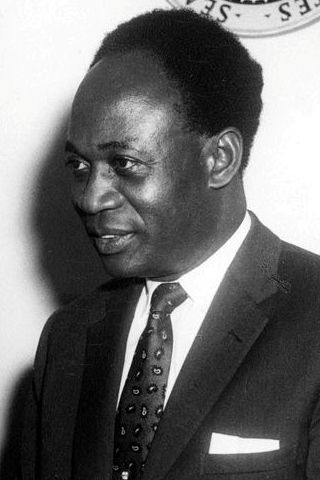
Nkrumah used these years to show that Ghanaians could govern. His government built schools and opened free primary education, improved roads, planned the new harbour at Tema, and began to think about a great dam on the Volta River.
More elections followed in 1954 and 1956. The CPP won both. Britain had promised that if the people voted clearly for independence, it would be granted. Now there was no reason left to wait.
Try this: Name two things the CPP government did before independence that still help Ghana today.
13 / 38
The road to 6 March
In 1956 the British Parliament passed the Ghana Independence Act. The date was set: 6 March 1957.
But first there was a question about the Trans-Volta Togoland, the strip of land east of the Volta that Britain ruled on behalf of the United Nations. Should it join Ghana or stay separate? In May 1956 its people voted, and most chose to join. Today it is part of the Volta and Oti Regions.
There was also the question of the name. The colony was called the Gold Coast, a name given by Europeans. J. B. Danquah had proposed Ghana, after the ancient West African empire of Ghana, which had been famous for its gold centuries before. The name said: we have a history older than the colony.
A flag was needed, and an anthem, and a Parliament. Everything had to be ready by midnight on 5 March.
Try this: Why was it important to choose an African name rather than keep "Gold Coast"?
14 / 38
The flag
Ghana's flag was designed by Theodosia Okoh, a teacher and artist from Accra. It has three horizontal stripes, red at the top, gold in the middle and green at the bottom, with a black five-pointed star in the centre.

Each colour has a meaning:
- Red for the blood of those who died in the struggle for freedom
- Gold for the mineral wealth of the land
- Green for the forests and farms
- The black star for African freedom and the hope of all African people
Ghana was the first African country to put the black star on its flag. Many other African nations later chose red, gold and green too, in honour of Ghana's lead.
Try this: Draw and colour the flag. Write one line under it explaining each colour.
15 / 38
Independence night
On the evening of 5 March 1957, tens of thousands of people filled the Old Polo Grounds in Accra, where the Kwame Nkrumah Memorial Park stands today. Guests had come from all over the world, including the Duchess of Kent representing Queen Elizabeth, the American civil rights leader Martin Luther King Jr, and leaders from across Africa.
At midnight the Union Jack was lowered and the new flag was raised. Nkrumah, wearing a prison cap to remember the struggle, stood with his ministers and spoke:
"At long last, the battle has ended! And thus Ghana, your beloved country, is free for ever."
He asked the crowd to sing the new national anthem. He declared that "our independence is meaningless unless it is linked up with the total liberation of the African continent."
Drums, dancing and fireworks went on until dawn.
16 / 38
The morning of 6 March
On 6 March 1957, Ghana woke up as a free nation. The new Parliament met. The Duchess of Kent handed over the documents of independence. Nkrumah became Prime Minister of an independent country within the Commonwealth, with Queen Elizabeth still as Queen until Ghana became a republic in 1960.

Even the stamps changed. The post office did not have time to print new ones, so old Gold Coast stamps were overprinted with the words "Ghana Independence 6th March 1957". Letters posted that week carried the news across the world.
Newspapers from London to New York put Ghana on the front page. For millions of Africans still under colonial rule, Ghana was proof that freedom was possible.
Try this: Imagine you are a child in Accra on 6 March 1957. Write three sentences about what you see.
17 / 38
Why Ghana was first
Ghana was the first country in sub-Saharan Africa to win independence from a European colonial power. Why Ghana, and not somewhere else?
- Education. The Gold Coast had some of the best schools in West Africa, and a large group of educated leaders.
- Wealth. Cocoa and gold gave the colony money and confidence.
- Organisation. The CPP reached every village, and ordinary people, especially market women, backed it with money and votes.
- Peaceful pressure. Positive Action showed Britain the cost of refusing, without a long war.
- Timing. After 1945, Britain was tired and poor, and world opinion had turned against colonies.
- Leadership. Nkrumah combined big ideas with the ability to speak to everyone.
Within ten years of 1957, more than thirty African countries had followed Ghana to independence.
Try this: Pick the two reasons you think mattered most and explain your choice to a friend.
18 / 38
Independence Square
To mark freedom, Nkrumah built Black Star Square, also called Independence Square, on the seafront in Accra. It was finished in 1961 for a visit by Queen Elizabeth II.

The square can hold about 30,000 people. On one side stands the Independence Arch, with the words "Freedom and Justice" and the dates AD 1957. Nearby is the Black Star Gate, topped with a large black star. The flame of the Eternal Flame of African Liberation, lit by Nkrumah, still burns there.
Every 6 March, the Independence Day parade is held here. Schoolchildren, soldiers, police and nurses march past the President, and the whole country watches.
Try this: Have you been to Black Star Square, or seen the parade on television? Describe one thing you remember.
19 / 38
The Independence Arch
The Independence Arch stands at the edge of Black Star Square, facing the sea. It was built so that the first thing visitors arriving by ship would see was a monument to freedom.

Carved on it are the words Freedom and Justice, which is also Ghana's national motto. The arch reminds us that independence was not only about replacing a British Governor with a Ghanaian Prime Minister. It was about building a country where everyone is free and treated fairly.
Many countries have a famous arch or monument: the Arc de Triomphe in Paris, the Gateway of India in Mumbai. Ghana's arch is younger than those, but it stands for something just as big.
Try this: Design your own monument to independence. What shape would it be, and what words would be on it?
20 / 38
Kwame Nkrumah Memorial Park
Nkrumah died in 1972, and in 1992 a memorial park was built for him on the very spot where he declared independence, the Old Polo Grounds in Accra.

The mausoleum, where Nkrumah and his wife Fathia are buried, is shaped like an upside-down sword, a symbol of peace. In front of it stands a bronze statue of Nkrumah with his arm raised, pointing forward. Fountains and a museum with his books, photographs and clothes surround it.
Every year thousands of schoolchildren and visitors come here to learn the story you are reading now. The park was renovated in 2023 and is one of the most visited places in Accra.
Try this: If your school visits Accra, ask to go to the park. What question would you want the guide to answer?
21 / 38
After independence: the early years
Independence was only the beginning. Nkrumah's government moved fast.
- Education: free and compulsory primary school, new secondary schools, the University of Cape Coast and Kwame Nkrumah University of Science and Technology in Kumasi
- Health: new hospitals and clinics
- Industry: Tema harbour and township, factories, the Ghana Airways airline
- Power: the Akosombo Dam on the Volta River, finished in 1965, which created Lake Volta and still provides much of Ghana's electricity
- Africa: support for freedom movements across the continent, and help in forming the Organisation of African Unity in 1963
In 1960 Ghana became a republic, with Nkrumah as its first President. The Queen was no longer head of state.
Not everything went well. Money was spent too quickly, and Nkrumah banned opposition parties. In 1966, while he was abroad, the army removed him from power.
Try this: Which of these projects affects your own life today?
22 / 38
What does independence mean?
Independence means a country governs itself. Its own people make the laws, choose the leaders, control the land and money, and decide how to deal with other nations.
For Ghana in 1957, independence meant:
- Ghanaians, not a British Governor, ran the government
- Ghana could have its own flag, anthem, money and passport
- Ghana could join the United Nations and speak for itself
- Taxes paid by Ghanaians were spent by Ghanaians
- Ghana could choose its own friends in the world
But independence also means responsibility. There is no one else to blame. If the roads are bad or the schools are poor, it is Ghanaians who must fix them.
Nkrumah said that independence was "meaningless" unless the whole of Africa became free, and unless it brought better lives to ordinary people.
Try this: Finish this sentence in your own words: "Independence means that we…"
23 / 38
Freedom and Justice
Ghana's motto, carved on the Independence Arch and printed on the coat of arms, is Freedom and Justice.
Freedom means you can speak, worship, travel, vote and choose your own path. In the colony, Ghanaians could be arrested for criticising the Governor. Today you can disagree with the President out loud.
Justice means everyone is treated fairly by the law, rich or poor, from the north or the south, whatever their language or religion. A country can be independent and still unjust. The motto reminds us that freedom from Britain was only half the job.
Worked example: A pupil is punished for something another pupil did. Is that freedom or justice that has failed? Justice. The rule was applied unfairly.
Try this: Give one example from your school of freedom, and one of justice. Then one example of each being missing.
24 / 38
The coat of arms and the anthem
Besides the flag, independent Ghana needed two more symbols.
The coat of arms was designed by Amon Kotei and adopted in 1957. A shield is divided into four by a green St George's cross edged with gold. The four parts show a sword and staff (local government), Osu Castle on the sea (national government), a cocoa tree (agriculture) and a gold mine (mineral wealth). Two golden eagles hold the shield. Above it is a black star. Below is the motto: Freedom and Justice.
The national anthem, "God Bless Our Homeland Ghana", was composed by Philip Gbeho. Its first verse asks God to make the nation "great and strong, bold to defend for ever the cause of Freedom and of Right."
Every Monday morning, pupils across Ghana sing this anthem and recite the national pledge.
Try this: Write out the first verse of the anthem from memory. Check it against the real words.
25 / 38
Independence Day today
Every 6 March is a public holiday. Schools, offices and markets close. In Accra, and in the regional capitals in turn, there is a great parade.
Schoolchildren practise marching for weeks. On the day, they wear their uniforms, line up in squads and march past the President in time to the Ghana Armed Forces band. The best squad wins a prize. Soldiers, police, firefighters, nurses and immigration officers march too. Aircraft fly past in formation.
At home, families watch on television. Many people wear clothes in red, gold and green. Churches and mosques hold special prayers for the nation.
It is a day to remember those who struggled, and to ask how far Ghana has come and how far it still has to go.
Try this: Has your school taken part in a 6 March parade? What did you have to practise?
26 / 38
Remembering the heroes
Independence was not won by one man. Many people gave their time, their money and sometimes their lives.
- Yaa Asantewaa, who led the Asante against the British in 1900
- The three ex-servicemen shot at Christiansborg in 1948
- The Big Six, arrested for leading the UGCC
- The market women who funded the CPP and spread its message
- Theodosia Okoh, who designed the flag
- Philip Gbeho, who composed the anthem
- Amon Kotei, who designed the coat of arms
- Thousands of ordinary people who marched, struck, voted and waited

Try this: Choose one hero from this list and find out one more fact about them.
27 / 38
Ghana and the rest of Africa
Nkrumah believed that Ghana's freedom was not complete while the rest of Africa was ruled by others. He gave money, training and a home in Accra to freedom fighters from across the continent.
Ghana's example spread quickly:
- 1958: Guinea
- 1960: seventeen countries, including Nigeria, Senegal, Mali and Congo
- 1961: Sierra Leone and Tanganyika
- 1962: Uganda
- 1963: Kenya
- 1964: Zambia and Malawi
In 1963, Nkrumah helped to found the Organisation of African Unity, which later became the African Union. He dreamed of a United States of Africa with one government, one army and one currency. That dream has not come true, but the African Union still works for cooperation today.
Try this: Find Guinea, Nigeria and Kenya on a map of Africa. In which order did they become independent?
28 / 38
A timeline
| Year | Event |
|---|---|
| 1471 | Portuguese ships reach the coast |
| 1874 | Britain declares the Gold Coast a colony |
| 1900 | Yaa Asantewaa leads the War of the Golden Stool |
| 1909 | Kwame Nkrumah born at Nkroful |
| 1947 | UGCC formed at Saltpond; Nkrumah returns home |
| 1948 | Christiansborg shooting and riots; the Big Six arrested |
| 1949 | Nkrumah forms the CPP |
| 1950 | Positive Action; Nkrumah jailed |
| 1951 | First election; CPP wins; Nkrumah released |
| 1952 | Nkrumah becomes Prime Minister |
| 1956 | Togoland votes to join; Ghana Independence Act passed |
| 1957 | 6 March: Ghana becomes independent |
| 1960 | Ghana becomes a republic |
| 1965 | Akosombo Dam completed |
| 1966 | Nkrumah removed from power |
| 1992 | Kwame Nkrumah Memorial Park opened |
Try this: Copy the timeline. Add your own birth year and the year your school opened.
29 / 38
People and places to know
People
- Kwame Nkrumah — leader of the CPP, first Prime Minister and President
- J. B. Danquah — UGCC founder, proposed the name Ghana
- Theodosia Okoh — designed the flag
- Yaa Asantewaa — Asante queen mother who fought the British
- Sergeant Adjetey — ex-serviceman killed in 1948
Places
- Nkroful — Nkrumah's birthplace, Western Region
- Saltpond — where the UGCC was founded
- Christiansborg (Osu) Castle — the Governor's seat
- James Fort — where Nkrumah was imprisoned
- Old Polo Grounds — where independence was declared
- Black Star Square — where the parade is held
Words
- Colony — a country ruled by another
- Independence — governing yourself
- Republic — a country with a President, not a monarch
Try this: Cover the right-hand side and test yourself on the names.
30 / 38
Common mistakes
Check that you have these right.
"Ghana became independent on 6 March 1956." No, 1957. The Act was passed in 1956, but independence came on 6 March 1957.
"Nkrumah did it alone." No. The UGCC, the Big Six, the CPP members, the market women and ordinary voters all played a part.
"Ghana was the first African country to be independent." Not quite. Ethiopia was never fully colonised, and Liberia, Egypt, Libya, Sudan, Morocco and Tunisia were independent before 1957. Ghana was the first in sub-Saharan Africa to win independence from a European colonial power.
"The Big Six were all in the CPP." No. They were the UGCC leaders of 1948. Only Nkrumah later founded the CPP; most of the others became his opponents.
"Ghana was a republic from 1957." No. Ghana became a republic in 1960.
Try this: Write one true sentence to correct each mistake.
31 / 38
Practice: quick questions
- What was Ghana called before 1957?
- On what date did Ghana become independent?
- Who designed the flag? What does the black star stand for?
- Name the Big Six.
- What does CPP stand for, and what was its slogan?
- Where was Nkrumah when the 1951 election was held?
- Where is the ancient name "Ghana" from?
- What is Ghana's motto?
Answers:
- The Gold Coast
- 6 March 1957
- Theodosia Okoh; African freedom
- Nkrumah, Danquah, Akufo-Addo, Obetsebi-Lamptey, Ofori Atta, Ako-Adjei
- Convention People's Party; "Self-government now"
- In James Fort prison
- The ancient West African empire of Ghana
- Freedom and Justice
If you got fewer than six right, read the timeline page again and try once more tomorrow.
32 / 38
Practice: think and write
Write a paragraph of four to six sentences for each.
- Explain why the 1948 riots were a turning point on the road to independence.
- The UGCC wanted self-government "in the shortest possible time" and the CPP wanted it "now". Explain the difference, and say which you would have supported.
- Describe the night of 5–6 March 1957 as if you were there.
- Nkrumah said independence was meaningless unless linked to the freedom of all Africa. What do you think he meant?
- What does "Freedom and Justice" mean for a pupil in a Ghanaian school today?
Tips: Begin with a clear first sentence that answers the question. Use at least two facts from this book, with dates or names. Finish with your own opinion.
Try this: Read your best paragraph aloud to someone at home and ask what they remember of 1957.
33 / 38
A class project
Work in groups to make an Independence Day display for your classroom.
Group 1: The timeline. A long strip of paper with the key dates, pictures and captions.
Group 2: The Big Six. A poster with each man's name, where he was from and what he did.
Group 3: The symbols. The flag, the coat of arms and the anthem, with the meaning of each colour and part.
Group 4: Independence night. A short play of the midnight ceremony, with the speech, the flag-raising and the anthem.
Group 5: Interviews. Record older people's memories of 6 March, or of the first Independence Day they remember, and write them up.
Put the display up for 6 March and invite another class to visit. Each group explains its part.
Try this: Which group would you most like to join, and what would you contribute?
34 / 38
What you have learned
- The land we call Ghana was home to many kingdoms long before Europeans came
- Britain made it the Gold Coast colony in 1874 and ruled it from London
- After the Second World War, people wanted change; the UGCC was formed in 1947 and brought home Kwame Nkrumah
- The 1948 riots and the arrest of the Big Six showed Britain that colonial rule could not last
- Nkrumah formed the CPP in 1949, led Positive Action, went to prison and won the 1951 election
- At midnight on 6 March 1957 the Gold Coast became Ghana, the first sub-Saharan colony to win freedom
- Ghana's flag, anthem, coat of arms and motto Freedom and Justice were created for the new nation
- Independence means governing yourself, and also taking responsibility for your country
The people of 1957 did their part. Every 6 March, the question passes to you: what will you do with the freedom they won?
35 / 38
Learn more
- Kwame Nkrumah on Wikipedia — the full story of his life, from Nkroful to the presidency
- The Big Six on Wikipedia — who they were and what happened to each of them
- Gold Coast (British colony) on Wikipedia — how the colony was run and how it ended
- Independence Day (Ghana) on Wikipedia — how 6 March is celebrated today
- Kwame Nkrumah Memorial Park on Wikipedia — the park and mausoleum built where independence was declared
36 / 38
Watch more
37 / 38
Think about it
- Why do you think Britain blamed the UGCC for the 1948 riots, when the march was by ex-soldiers?
- Nkrumah wore a prison cap on independence night. What message was he sending?
- Would Ghana have become independent in 1957 without Nkrumah? Give a reason for your answer.
- What is the difference between being free from colonial rule and being a country with "Freedom and Justice" for everyone?
- What would you add to the Independence Day parade to make it mean more to young people?
38 / 38
This book is for reading on SchoolSpec and cannot be printed.